SSH Stores - High Speed Premium VPN & Free SSH Accounts
Get free SSH and VPN accounts with SSL/TLS support. Enjoy high-speed connections, unlimited data transfer, and secure browsing with SSH Stores' premium services.
Advanced Security
We encrypt your data to protect your Internet connection so you may surf the web safely at home, at work, or in public.
Digital Privacy
Browse with greater privacy by masking your IP address. Reduce what your internet service provider can observe about your online activity.
Open Access
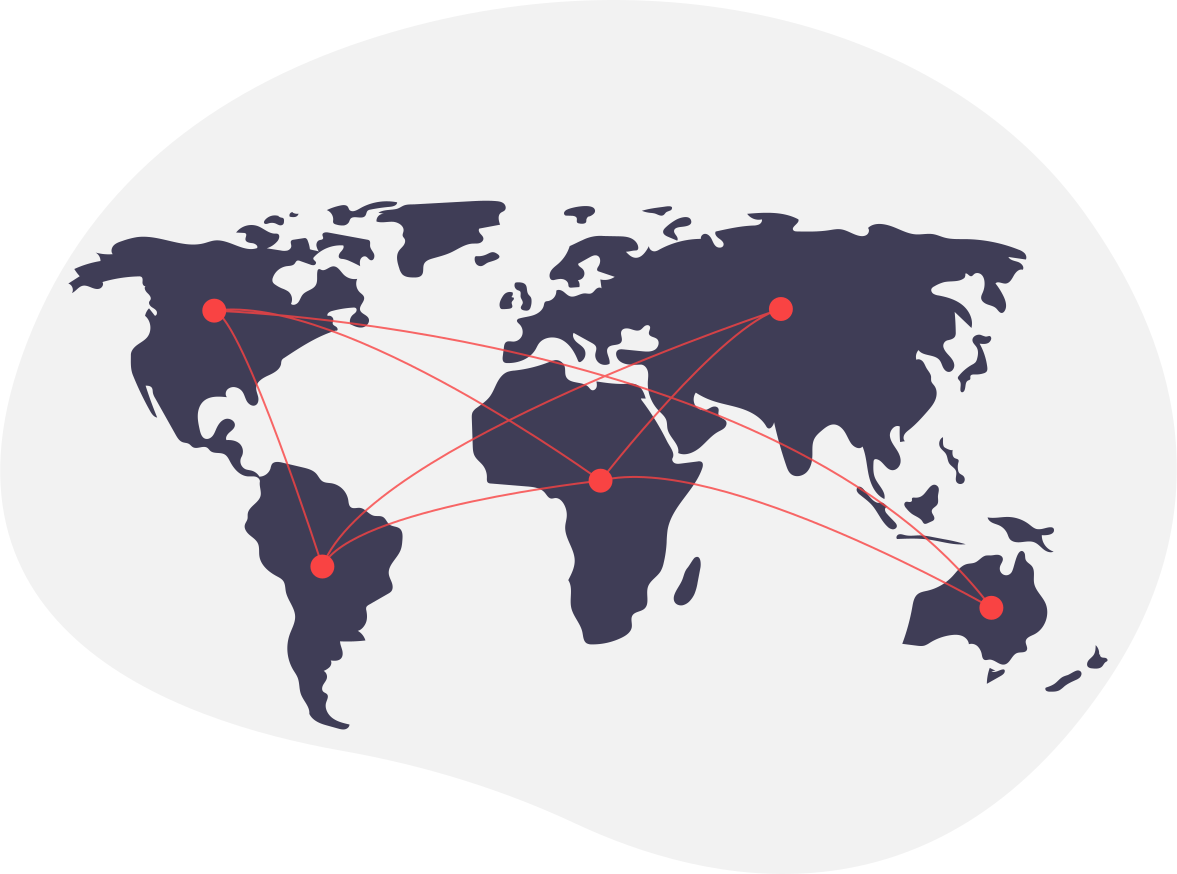
Connect through servers in multiple regions to access content globally. Choose the nearest server for lower latency and better performance.
To get the maximum speed of connection choose the location nearest to your country.
Create Account
Australia Trojan Server 1
What is the V2Ray Protocol?
V2Ray is a next-generation proxy framework developed as part of the Project V initiative. Unlike traditional VPN protocols, V2Ray supports multiple proxy protocols including Vmess, Vless, Trojan, and Shadowsocks, all within one unified client and server.
V2Ray uses transports such as WebSocket + TLS, which helps make your connection look like ordinary HTTPS web traffic. This design provides privacy and flexibility across different network environments.
How V2Ray differs from traditional VPNs
A conventional VPN uses well-known protocols like OpenVPN or WireGuard. While these are secure, they have identifiable traffic patterns. V2Ray provides additional transport options that some users find useful for compatibility with different network configurations.
V2Ray provides traffic obfuscation through standardized transport layers. When configured with WebSocket + TLS over port 443, your traffic passes through standard encrypted channels — similar to how a web browser communicates securely.
How to use your V2Ray account
After creating your account above, you will receive a configuration file or a set of connection parameters including the server address, port, UUID, and transport settings. You can import this configuration into a V2Ray-compatible client.
Recommended clients include v2rayNG for Android, V2RayX or V2RayU for macOS, and Nekoray or Qv2ray for Windows and Linux. Most of these clients support importing configuration via a URL or QR code — simply scan or paste your config link and tap connect.
Supported Protocols
What makes V2Ray different from a regular VPN?
V2Ray uses encryption and multiple transport options to provide flexible, secure connections. Here is what sets V2Ray apart from other privacy tools.
- Encrypted transport over standard ports — traffic uses TLS and common protocols for compatibility
- CDN-compatible — WebSocket+TLS transport works through CDN services
- Multi-protocol support — one client handles Vmess, Vless, Trojan, and Shadowsocks
- Multiple transports — WebSocket, gRPC, QUIC, and mKCP for different network conditions
- Cross-platform compatibility — supported on many devices and operating systems
- Actively maintained — open-source community with regular updates and security improvements
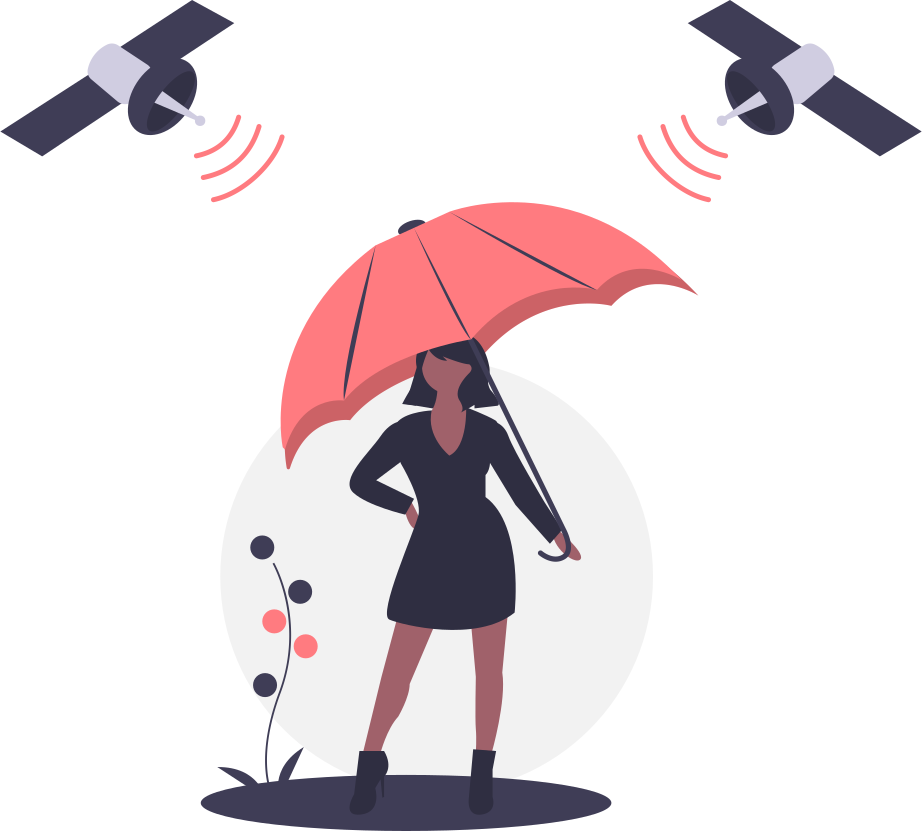
Connect Securely on Any Device or Network
A VPN account protects your browsing on all networks — including public Wi-Fi, mobile data, and shared connections.
Every time you connect to the internet through a VPN server, your traffic passes through an encrypted tunnel before reaching websites and online services. Without this tunnel, your internet provider, the operator of the Wi-Fi network you are using, and even other people on the same connection may be able to observe metadata about your online activity. The VPN hides your real IP address and encrypts data so that your browsing stays private.
Public Wi-Fi is one of the biggest risks for unprotected internet users. Cafes, airports, hotels, shopping malls, and university campuses offer free Wi-Fi that is often unencrypted or weakly protected. Attackers can easily intercept traffic on these networks to steal login credentials, credit card information, or personal messages. When you activate your VPN before connecting to a public hotspot, your traffic is encrypted before it hits the Wi-Fi network, making interception useless.
Mobile data networks are slightly more secure than public Wi-Fi, but they are still operated by your mobile carrier, which can see your browsing metadata. A VPN hides your traffic from your carrier and can provide a more private mobile experience.
Why You Should Create a VPN Account Right Now
In many countries, internet providers collect and sell browsing data about their customers. Even if you have nothing to hide, the idea that a third party profits from your browsing history without your knowledge or consent is troubling. A VPN blocks this data collection by preventing your provider from seeing which websites you visit.
Remote workers and freelancers handle sensitive company information, client data, passwords, and intellectual property every day. Using a VPN is a simple step that significantly improves the security of this data, especially when working from different locations or traveling.
Live streaming services, social media platforms, news websites, and gaming servers often restrict access based on your geographic location. A VPN allows you to connect through servers in different countries, giving you access to content that may be unavailable where you are. This is especially valuable for students, travelers, professionals, and anyone who follows content across regions.
The account you create here is free and temporary. Use it to test which protocol works best for your needs, compare connection speeds between server locations, and understand how VPNs fit into your daily routine before committing to any paid service.
VPN Security Best Practices
A VPN account provides strong privacy protection, but combining it with good security habits makes your connection even safer. Follow these simple practices to get the most out of your VPN connection.
Use Strong and Unique Passwords
Create a different password for each VPN account. Avoid using the same password you use for email, social media, or banking. A strong password combines letters, numbers, and special characters.
Test Your Connection Before Important Tasks
After connecting to your VPN, verify that your IP address is hidden by using an IP checker tool. Make sure your DNS queries are also going through the VPN tunnel before entering sensitive information.
Know Your Account Validity Period
Free accounts have time limits, usually between 3 and 30 days depending on the protocol. Note the creation and expiration dates so you can create a new account before your current one expires and avoid service interruption.
Keep Your VPN Client Updated
VPN applications receive regular updates that fix bugs, improve performance, and address security issues. Download clients from official sources such as the Play Store, App Store, or the official GitHub repository.
Do Not Rely Only on Your VPN
A VPN protects your connection, but it does not replace antivirus software, browser security, or good judgment. Do not click suspicious links or download unknown files just because you are connected through a VPN.
Pick the Nearest Server for Speed
For fastest browsing, choose a server near your country. Use distant server locations only when you specifically need an IP address from that region to access location-specific content.